
Production flexibility for optimal workflows
Deliver the right data to the right people at the right time to make actionable decisions ahead of time

Flexible manufacturing systems let you shift workflows effortlessly
Enhance your ability to be proactive with the variables you need to consider in your day-to-day operations. And connect your manufacturing components to meet customer demands, eliminate potential failure points and increase or adjust production system productivity without incurring excessive costs and resources.
Many companies face challenges in tracking parts across their factory or from one facility to another thus driving increased costs, labor and inaccuracies along the way. Lack of visibility to inventory, points of failure, etc. results in product shortages and missed production cycles. Through Industry 4.0 connectivity, automation, fast information exchange and analytics, a new dimension of flexibility can be reached, and new approaches to planning and controlling production systems can be designed.
The outputs of a Smart Factory on manufacturing:
-
Enhanced Productivity
– reduce production time, enable better asset utilization, and inventory management with higher levels of automation -
Enhanced Flexibility
– execute the production steps for a large, or small number of products -
Enhanced Quality
– monitor current production in real-time and quickly intervene in case of errors via smart sensors
What production flexibility can do for you:
Move away from Excel spreadsheets and other manual processes to automated solutions to better optimize the planning and scheduling of building a product. Bolster the continuity of operations — even with skeletal crews — with automated equipment-monitoring and process systems. Reduce cycle times and higher yield, quality, energy and throughout process industries where process parameters must be constantly monitored and optimized. And maximize operating equipment and process parameters to increase overall equipment efficiency. You can accomplish all of this, and production flexibility helps you get there.
Flexibility within production requires visibility into the production floor. Our solutions provide these insights by being the data collection and integration tools that help you make better production decisions in real time.
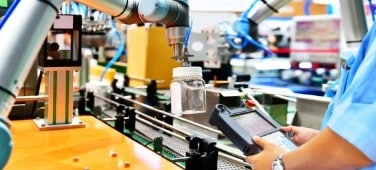
Eliminate Human Error and Automate Processes
- Free up employee time to spend more time on valuable tasks
- Paperless manufacturing helps automate inventory to minimize manual data input and maximize cost savings
- Reduce the risk of reliance on institutional knowledge through automation
- Eliminate fees to expedite overtime rates
- See when items run low for efficient re-ordering
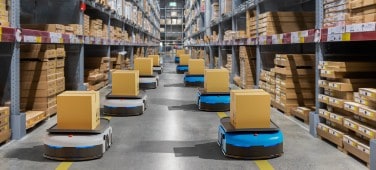
Boost Productivity
- Maximize asset utilization and minimize downtime
- Drive direct and indirect labor efficiencies
- Manage supply network costs and synchronization
- Ensure both schedule and plan stability and accuracy

Reduce risk
- Ensure raw materials price and availability
- Manage warranty and recalls effectively

Ensure continuity of supply
- Lean inventory management
- Drive order lead time, production schedules, and batch lot allocation of inventory
- Free operating cash, reduce debt to plan improvements, and potential acquisitions

Minimize costs and optimize reorders
- Organize and scale across facilities
- Forecast inventory
- Manage inventory to realize economies of scale
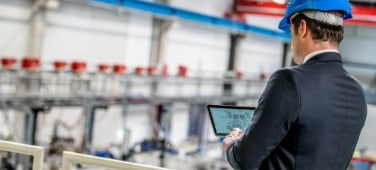
Track work orders in real-time
- Rapidly generate transaction data within the end-to-end manufacturing process
- Track the bookends of raw materials in and finished goods out
- Record line production and create actionable data
- Create operational intelligence not tied to people resources

Real-time data and end-to-end visibility will revolutionize your manufacturing operations.
What production flexibility can do for you:
Move away from Excel spreadsheets and other manual processes to automated solutions that optimize planning and scheduling. Maintain operational continuity—even with skeletal crews—using automated equipment-monitoring and process systems. Reduce cycle times, improve yield, quality, and energy efficiency across process industries where parameters must be constantly monitored and optimized. Maximize equipment and process performance to increase overall equipment efficiency. Production flexibility makes all of this possible.
Flexibility in production starts with visibility on the shop floor. Our solutions provide real-time insights through data collection and integration tools, helping you make better production decisions when it matters most.
| Speed | Productivity | Quality | Efficiency | Flexibility |
|---|---|---|---|---|
| Reduce cycle times | Decrease production time | Monitor production in real time | Reduce human error | Shift easily as demand changes |
| Increase throughput | Better utilize labor, equipment, assets | Quickly intervene in case of errors | Eliminate downtime/overtime | Organize and scale across facilities |
| Make better decisions, faster | Manage inventory effectively | Identify and fix issues proactively | Forecast accurately | Continually optimize production |
| Innovate quickly | Create one version of the truth |