
Why Every Maintenance Plan Needs Infrared Thermography for Electrical Inspection
In manufacturing environments, you can't manage what you can't see. And when it comes to the safety and reliability of your electrical systems, there can be a lot hiding just out of sight. A loose connection in a control panel, for instance, won't spark or make a sound. But it will generate heat — and that heat is a silent warning of a looming failure and, ultimately, a safety incident.
That’s where infrared (IR) thermography comes in. It’s a simple yet incredibly effective way to see these hidden thermal signals, giving you the power to find and fix warning indicators before they become expensive and dangerous problems.
What is infrared thermography for electrical inspection?
Infrared thermography is a non-contact inspection method that uses a thermal camera to detect heat signatures. But instead of seeing a traditional image, you see a heat map with different colors representing different temperature. It’s an incredibly valuable predictive maintenance tool that quickly pinpoints unusually hot components in electrical systems — a problem indicator that always demands immediate attention.
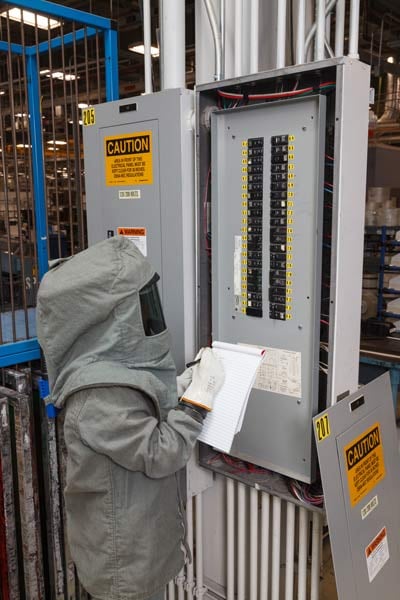
Why infrared solutions for arc flash safety aren’t just nice-to-haves
Infrared scanning for arc flash detection is a proactive measure that is both a best practice and, as of 2023, required by NFPA 70B. Here are a few reasons your facility needs to implement it.
IR thermography helps prevent unplanned downtime
Spotting a developing hotspot today means you can schedule a repair on your own terms. This prevents the surprise equipment failure that stops production and costs you thousands.
Thermal imaging is a key measure to boost workplace safety
Heat is a key warning sign of an arc flash risk. By identifying and resolving these hot spots, you're directly reducing the risk of a life-threatening electrical incident and keeping your team safe.
IR scanning solutions enhance inspection efficiency
Instead of manually checking every connection, thermography allows you to scan entire panels in minutes. And with the use of IR windows, it can be done from a safe distance without opening up a panel that puts people in higher-risk situations.
Infrared thermography is now required for compliance
Standards are constantly changing to keep up with best practices. For example, the 2023 edition of NFPA 70B now requires infrared thermography as part of annual electrical equipment inspections, so implementing it now helps you stay ahead of the curve.
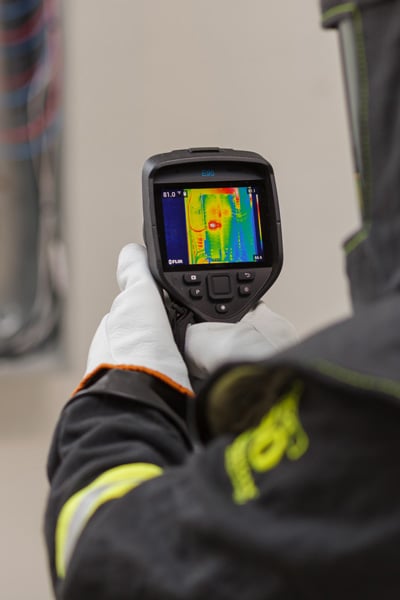
Your partner in compliant, proactive electrical safety
Ready to uncover hidden risks in your facility? Compliance with electrical safety standards is a key part of keeping your facility and your people safe. But navigating the requirements can be a challenge. The experts of the Brady Safety Services team can help you with all key requirements, including infrared scanning for arc flash detection, that keep your operations compliant, including:
- Arc Flash Risk Assessments (required every five years)
- Qualified Electrical Worker Training (required every three years)
- Infrared Thermography (required annually)
With our Infrared Thermography service, we’ll work with you to cover everything needed and provide a list of all equipment imaged and their images, recommendations for repair, and an executive summary. Reach out to the helpful Brady Safety Services team today if any of these essential checks are coming up for you.
