
TAA Compliance for Government Contractors
If your business provides products or services to the US government, you’ve likely seen the term “TAA compliant.” TAA compliance is a requirement for most federal procurement, and is essential for winning and retaining lucrative government contracts.
What is the TAA?
The TAA refers to the Trade Agreements Act of 1979, which is a federal law that limits the country of origin for products that government employees and contractors purchase. This law’s primary function is to promote fair international trade and ensure that products that the government buys are from the US or another designated country.
Designated Countries
For a product to be TAA compliant, it must be grown, produced, manufactured, and substantially transformed in the US or in a designated country. TAA-designated countries are countries that fall into specific categories, including:
- World Trade Organization Government Procurement Agreement Countries
- Free Trade Agreement Countries
- Caribbean Basin Countries
- Least Developed Countries
You can check the US General Services Administration website for a current list of compliant countries.
Why TAA Compliance Matters
Even though it was passed more than 40 years ago, the TAA is still relevant today. Beyond being a set of trade rules, the TAA also:
- Promotes fair trade and stimulates domestic business. By prioritizing products from the US and its trade partners, the TAA helps create a level playing field for domestic manufacturers and supports US economic interests and trade partners.
- Helps maintain secure supply chains. Given increasing technology integration, the TAA serves as a critical measure to mitigate supply chain security risk, and defend against vulnerabilities in products manufactured in non-designated foreign countries.
How can you tell if a product meets TAA compliance
TAA compliance is the responsibility of the product seller. There are a few ways to know if the product is compliant.
- Manufacturer Certification. Most companies will specify if a product is TAA compliant. Sometimes, companies will offer very similar products, but only one will be TAA compliant. Be sure to consult the product page, the documentation, or speak with a representative of the company
- Review Suppliers. Stay up-to-date with your suppliers’ practices and sources. A simple change in the manufacturing process can invalidate TAA compliance.
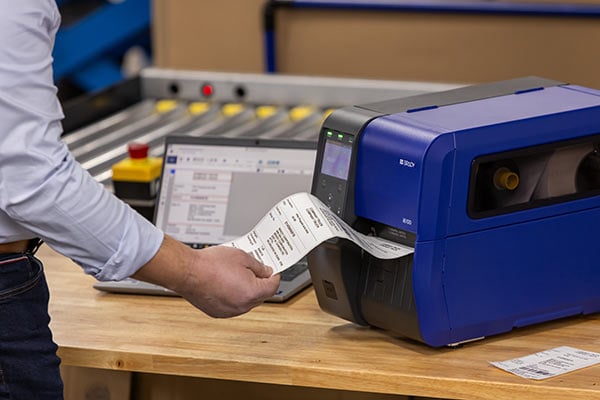
TAA compliance and service providers
The TAA compliance requirement isn’t limited to the sale of physical products. Sometimes government contracts, such as the long-lasting GSA schedules, include a clause that requires contractors to use TAA-compliant products when performing services for the government. This might be a provision to even bid for the job.
The consequences of non-compliance
There can be severe repercussions for companies that accept a government contract with a TAA clause that they don’t follow. Whether through ignorance or willfully breaking the agreement, consequences can include:
- Contract termination or cancellation
- Financial penalties and lawsuits
- Suspension or Debarment from bidding on future government contracts.
How Brady can help
Brady offers several TAA-compliant printers, along with compliant materials, to help you meet your contractual obligations. We also offer the only portable TAA-compliant label printer on the market, so you can maintain compliance while working on-site.