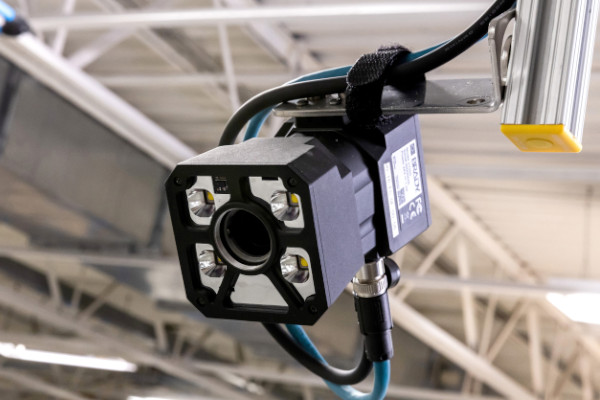
2D Barcodes and Their Advantages
Due to several traceability initiatives, product coding is experiencing rapid changes. Customers expect more information about the products they’re buying. Governments are beginning to impose regulations that demand better product tracking. The result? More data must be included in product codes, in particular, dynamic data such as expiration dates and serial numbers. The 1D barcodes we’re used to seeing on every packaged product does not provide the needed functionality any longer and technologies such as printers and scanners must adapt.
To help navigate these challenges, we talked to Raymond J. Fortuna, Brady’s Global Product Manager: Microfluidic Solutions. We asked about GS1 and how Sunrise 2027, Digital Product Passports and the Food Safety Modernization Act affect the future of product traceability.

Meet the Expert
Raymond J. Fortuna
Global Product Manager: Microfluidic Solutions
Brady Corporation
Ray Fortuna is an official member of GS1 and a regular participant in monthly cross-industry discussion groups that are focused on developing standards around the 2D code “revolution.” With the acquisition of Funai Microfluidic Solutions, Ray joined Brady in 2025 as a Global Product Manager but has more than a decade of managing coding technologies including thermal inkjet, laser and piezo printers.
What is GS1?
There’s a common misconception that GS1 is an organization that creates regulations, but it’s really a global platform that gives a common language to stakeholders. GS1 connects industries, governments, regulatory bodies, customers and other organizations by creating voluntary standards that companies utilize to improve operational efficiency, reduce costs, and improve traceability through the entire supply chain.
One of the primary ways to accomplish these goals is by distributing and maintaining a centralized database of identification numbers, called GTINs.
What are GTINs?
Global Trade Item Numbers, or GTINs, are unique, internationally recognized identification numbers for products and services across different industries and markets. Companies purchase unique GTINs from GS1 and assign them to a product variant - say a Brady M511 Portable Bluetooth Label Printer Kit.
This GTIN is a 14 digit number, and embedded within the GTIN is a 12 to 13 digit sequence ranging from 0-9. That sequence gets transcoded into the familiar UPC or EAN barcode, which is scanned at point of sale. When scanned, a lookup function ensures that the product is an authentic Brady M511 Printer Kit and pulls product information – such as pricing.
GTINs are required for products sold in most stores as well as major online retailers.
What is GS1 Sunrise 2027
Sunrise 2027 is a voluntary GS1 initiative to retire the familiar 1D barcodes and replace them with more advanced 2D codes by the end of 2027.
2D barcodes became pretty common during and post-Covid, smart phones now incorporate camera scanners and consumers are getting more and more used to using them. Those iconic vertical lines have done a great job, but a new type of consumer has emerged that expects a more personalized engagement with the products that they buy.
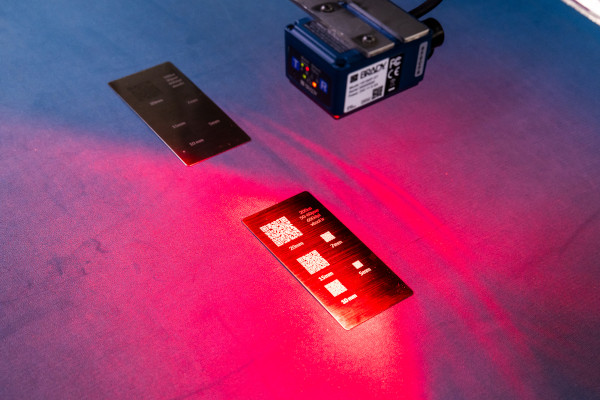
You’ve seen 2D barcodes - QR and Datamatrix are popular forms of 2D codes with the ability to store up to 2,300 alphanumeric characters. Unlike linear barcodes that fail to scan due to a single print imperfection, 2D codes embed error correction and are much more forgiving; ideal for printing in a production environment.
Producers are realizing that GTINs and dynamic data are just the beginning and creative uses of the “data headroom” are emerging. So who benefits from the switch to 2D codes?
Who Benefits From the Switch to 2D Codes?
|
Role |
Benefit |
|---|---|
|
Production Manager |
Incorporate 2D codes to enable cradle-to-grave visibility on products. |
|
Store Manager |
Simplify Point-of-Sale (POS) codes to speed scanning, simplify price changes and automate inventory management. |
|
Marketing |
Enable customized user experiences to enhance product engagement and develop stronger brand loyalty. |
|
Corporate Management |
Guide consumers to corporate statements, such as raw material sustainability, fair labor practices and social stances. |
With change comes challenge. There’s 50+ years of scanning infrastructure to overcome because traditional POS laser scanners cannot read a 2D code. If 2D barcodes are going to replace the 1D codes, manufacturers, retailers and others in the supply chain need to test and potentially update their laser scanners to camera-based equipment (See GS1 Capabilities Test Kit). Sunrise 2027 is also a campaign to educate people about the benefits of upgrading, and helping them find smart ways to do it.
Learn more about Sunrise 2027.
2D barcodes are supposed to help with product traceability. Why is traceability so important?
In the future, there will be no such thing as an anonymous product. Manufactured and grown products will have a birth certificate, a resume and a retirement plan.
Beyond consumer expectations, countries are imposing regulations that require a full picture of a product. The EU requires Digital Product Passports (DPPs) for certain items to be legally sold in the member countries and this passport acts as a digital twin of the product. The passport will include: raw material consumption, manufacturing environmental footprint, finished good repairability and recycling instructions. A true product circle of life.
What are some opportunities for this improved traceability?
When you have a complete record of a product’s entire journey through the supply chain, you open up a lot of opportunities to make changes.
For example, the Food Safety Modernization Act section 204 (FSMA 204) requires that Key Data Elements (KDEs) must be tracked for certain products. KDEs consist of dynamic data including Expiration Date, Serial Numbers or Lot/Batch data.
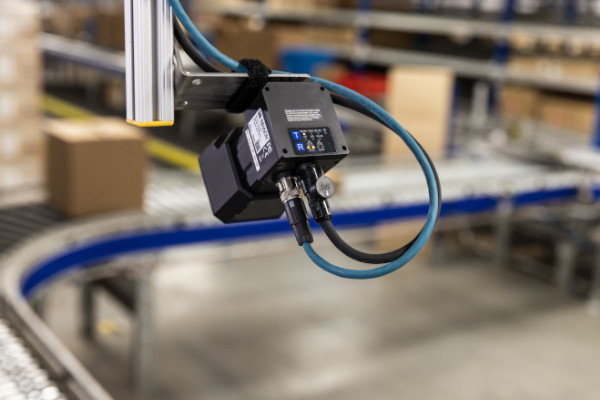
Because dynamic 2D data cannot be preprinted on packaging like the static UPC and EAN barcodes, 2D codes containing this data must be generated, applied, and verified at the time of production.
Think about buying lettuce at your local supermarket. Now that you are your own cashier, you locate then scan the barcode, a price pops up and you pay. That 1D barcode did its job and you have your lettuce.
But there’s much more information that could be reported for that single head of lettuce. With a 2D code, that scan could reveal which farm grew the lettuce, where the lettuce was packaged, and distribution facilities that handled the produce because KDEs were automatically collected at each step, called Critical Tracking Events (CTEs). After checkout, there would also be a record of sale assigned to the store (the “final” CTE).
In the event of a product recall, FSMA 204 requires that all KDEs for the affected products be supplied to the FDA within 24 hours of request. Because of data rich 2D codes, the entire list of KDEs at CTEs have been logged and reporting to the FDA is as simple as forwarding a spreadsheet. For the store manager, instead of destroying all inventory that might have been affected, a store could scan their inventory with precision and identify which specific heads were contaminated.
This also improves recalls for consumers. When notified of the recall, consumers can scan the bag of lettuce with a smartphone and know for certain if they were affected by the recall. If affected, disposal instructions would be communicated and a digitized code could be generated for a free product replacement.
How can Brady help companies adapt to this changing landscape?
Dynamic product data shifts how we buy, ship, use and dispose of all manufactured products, and many facilities will need substantial upgrades in printing and scanning equipment. Software solutions logging traceability data need to be thorough and nimble enough to meet these new industry demands.
With Brady’s product portfolio, we are positioned to enable our customers to take advantage of the benefits of data rich 2D codes. By leveraging our expertise in many of these categories, we can offer integrated solutions that solve customer pain points, not just sell a product.
Get in touch
Our team is ready to help you update your manufacturing operations.
Give us a call at 800-553-0895 or send us an email at bradyusa@bradycorp.com.
Email Us