
The Machine Guarding Standard and What OSHA Requires
Year after year, machine guarding sits on OSHA’s top 10 list of safety violations. And in 2026, it took the 10th spot once again. Behind those citations are real, very dangerous health risks: severe pinch points, flying debris and hazardous energy sources to name a few. The good news is that effective machine guarding doesn't require overcomplicated processes.
Building a safer, fully compliant facility is straightforward when you know exactly what OSHA looks for. Here are the some key parts of the machine guarding standard every safety and maintenance leader should have on their radar.
Machine guarding purpose (1910.212(a)(1))
The primary objective of machine guarding is to protect operators and nearby employees from hazards created by in-going nip points, rotating parts, flying chips and sparks. Common methods include physical barrier guards, electronic safety devices and two-hand operating controls.
General requirements (1910.212(a)(2))
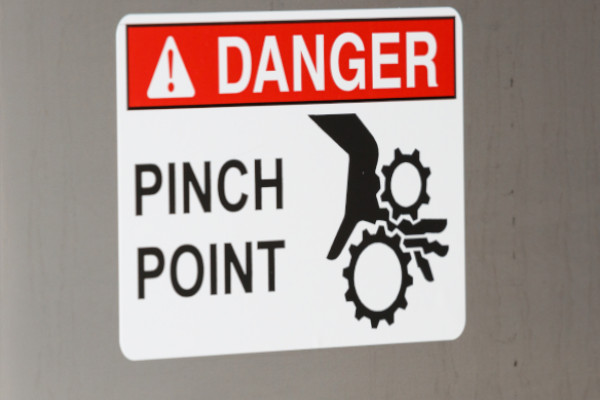
Guards must never create additional hazards in the workplace (such as sharp edges or pinch points). They must be securely attached directly to the machine wherever possible. If attachment to the machine is not possible, guards must be safely secured elsewhere.
Point of operation guarding (1910.212(a)(3)(i–iii))
The point of operation is the area on a machine where work is actively performed.
- Mandatory protection: Any machine that exposes an employee to injury at the point of operation must be guarded using devices that conform to appropriate industry standards
- Danger zone isolation: In the absence of specific standards, machine construction must physically prevent the operator from placing any part of their body in the danger zone during the operating cycle
- Special hand tools: Hand tools used for placing or removing material must allow easy handling without placing hands in the danger zone (hand tools do not replace required physical guards)
Machines usually requiring specific point of operation guarding (1910.212(a)(3)(iv))
OSHA identifies high-risk machinery that often require point-of-operation machine guarding protection, including:
- Guillotine cutters and shears
- Alligator shears and power presses
- Milling machines, power saws and jointers
- Portable power tools
- Forming rolls and calenders
Barrels, containers and drums (1910.212(a)(4))
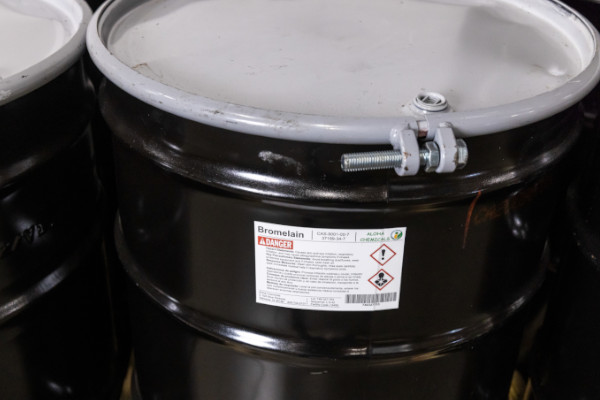
Revolving barrels, containers and drums must be enclosed. The guard enclosure must be interlocked with the drive mechanism so the container can't revolve unless the protective guard is securely in place.
Anchoring fixed machinery (1910.212(b))
Machines designed for a fixed location must be securely anchored to the floor or foundation to prevent walking, tipping or moving during operation.
Eye and face protection (1910.133(a))
Proper physical guards must be combined with personal protective equipment (PPE). Employers must provide appropriate eye and face protection to employees exposed to flying particles, sparks or chemical splashes.
Lockout tagout integration (1910.147(c)(1))
Machine guards protect workers during normal production, but servicing or maintaining machinery requires energy isolation. Employers must establish a comprehensive lockout tagout energy control program. This includes documented machine-specific procedures, employee training and regular inspections to ensure all energy sources are isolated and machines are inoperative before maintenance begins.
Reinforce machine guarding with durable identification
Whether you utilize physical barrier guards, two-hand tripping devices or electronic safety eyes, effective machine guarding saves lives and keeps you compliant. But safety doesn't stop there. Machine guards can only protect your workers if they remain installed, identified and properly utilized.
Brady can help you maintain a safe, compliant facility with:
- Visual workplace safety identification: Reinforce physical guarding with standardized OSHA/ANSI Machine Safety Signs to clearly mark pinch points, automated start risks and machine guarding requirements
- Floor marking and workstation zones: Use high-visibility ToughStripe® Floor Marking Tape to designate safe operator clearance zones around machinery
- Lockout tagout: Streamline compliance with Brady lockout tagout solutions, including LINK360® Software, devices and padlocks