
Preventing OSHA Citations with Equipment Inspections - A Guide to OSHA's New Mandate
Guide Summary
Over the past few years, the U.S. Department of Labor has shifted the mandate of OSHA to take on a more advisory and investigative role. This contrasts with its previous focus that leaned more heavily on random inspections and citation issuance. OSHA personnel and time resources have moved toward:
- Investigating employee complaints
- Inspecting high-risk areas
- Helping companies reach compliance
This guide will show you how to adapt to OSHA's new mandate, avoid fines and prevent workplace injuries with focused inspections and good documentation.
Inspections and tags are key defenses
Inspections
Worn gear belongs off the floor, period. It's why OSHA mandates specific inspections and issues citations for failure to comply. Routine visual checks and detailed equipment inspections satisfy OSHA requirements and stop dangerous failures before they happen. When you build a proactive inspection process, you take control of workplace safety, eliminate hazards before they cause harm and stay clear of costly citations.
Be sure you understand which inspections are required in your facility or site and how often you need to perform them. Also note that some inspection requirements call for a “competent person” to perform the inspection. A competent person is different from a qualified person, who holds recognized certifications. A competent person isn't formally certified, but instead is defined as someone who “is capable of identifying existing and predictable hazards… and who has authorization to take prompt corrective measures to eliminate them.”
You know your facility, but staying on top of every inspection cycle takes time and resources. Partner with the Brady Safety Services team to request an on-site safety audit and build an inspection program.
Tags
Tags are the physical evidence of an inspection. A tag with inspection dates and information about who performed the inspection shows both auditors and employees that the equipment is being proactively managed.
Having visual documentation encourages employees to take safety seriously and call out unsafe practices. Employees tend to file OSHA complaints when they don’t think their company will act to keep them safe, or they fear retaliation for speaking up. If you listen and take their concerns seriously, there is less of a need to contact OSHA directly.
Get a Safety Consultation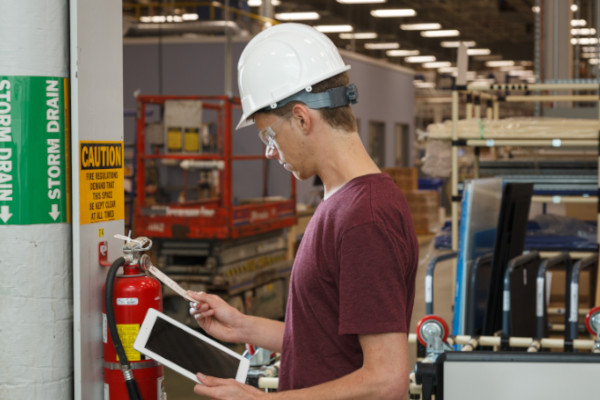
Fundamentals of an effective equipment tagging system
An effective equipment inspection and tagging system includes visual safety protocols and thorough documentation. Keeping detailed records of every inspection can help you pinpoint gaps in your safety process, as well as demonstrate that you maintain an active tagging program. In the case of a violation, the OSHA Field Operations Manual states that the inspector can reduce fines if a “good faith effort” is shown. Having active procedures demonstrates this good faith effort.Stoplight systems
To help with fast visual identification and give employees confidence in your inspection process, consider implementing a “stoplight system.” This very well-known and easy-to-identify system uses the traditional red, yellow and green colors of a traffic stoplight to indicate safety levels.
- Green tags mean the equipment has been inspected and is safe to use.
Something to watch out for: Green tags can give a false sense of safety. Technically, if the date on the tag is not the current date, the equipment is uninspected. Scaffolding, for example, needs to be inspected before every work shift, as well as every time it is reconfigured or moved. - Yellow tags indicate that the equipment may be safe to use, but there's a potential issue that needs further investigation. Some companies use yellow tags to show that a piece of equipment has been inspected, but a more thorough inspection, or mandatory replacement is coming up. Others use yellow tags to caution workers about equipment use that is more dangerous than they may expect.
- Red tags are a full stop. The equipment has been inspected and deemed unsafe, is undergoing maintenance or in the case of scaffolding, may be erected, but not fully inspected yet.
Modernizing your inspection process
Consider incorporating unique IDs for each piece of equipment. While it may seem like overkill to assign IDs to large, stationary machines, ensuring that ladders, safety harnesses and other equipment have unique identifiers creates a stronger inspection and documentation link. Your records can show the exact ladder that was inspected by whom and on what date, in a centralized system. Using QR codes can help streamline this process. And when integrated with the right safety documentation system, compliance can become an automated task.Tactics for specific equipment categories
Ladders
Ladders are one of the most common pieces of workplace equipment. They also regularly make an appearance on OSHA's top 10 citations each year. Their ease of use and limited qualification requirements can easily put workers in hazardous situations when safety rules are ignored.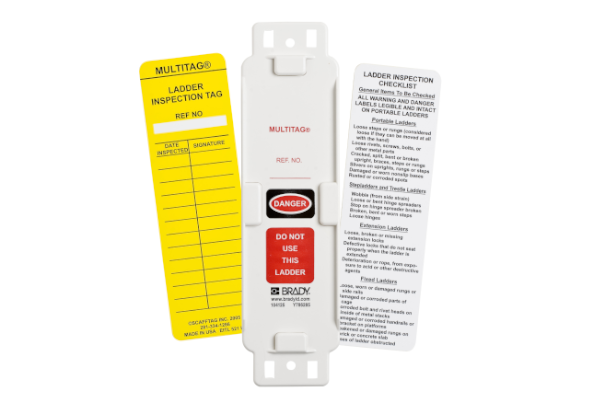
Ladder Inspection Checklist
Identify physical defects
- Are there cracked rails, missing hardware, bent rungs or worn slip prevention?
- Does the ladder wobble when set up?
- Does the locking mechanism look worn?
- Is there oil or grease anywhere on the ladder?
Load capacity
- Is the maximum load clear and visible?
- Is this ladder only used in situations where the worker and gear meet those requirements? Or is there the potential for overloading?
Tagging
- Give each ladder a unique identifier — This shows which ladder was inspected when, not just that “a ladder” was inspected.
- Know the inspection schedule — Any worker who uses the ladder needs to perform a visual inspection before using, but a more thorough inspection may be required quarterly, annually or at a different interval depending on your industry.
- Have a tagging system that defaults to “do not use.” — Brady offers scafftags that have “do not use” directly on the tag holder, meaning that you add the green inspection tag after inspection. Any ladder without a current green tag should be considered unsafe.
Scaffolding
OSHA scaffolding regulations are put in place to prevent employee falls and eliminate injuries due to falling objects. Because scaffolding use carries immense risk, there are strict requirements for inspections. OSHA requires a competent person to inspect scaffolding before every shift and after any incident or weather event.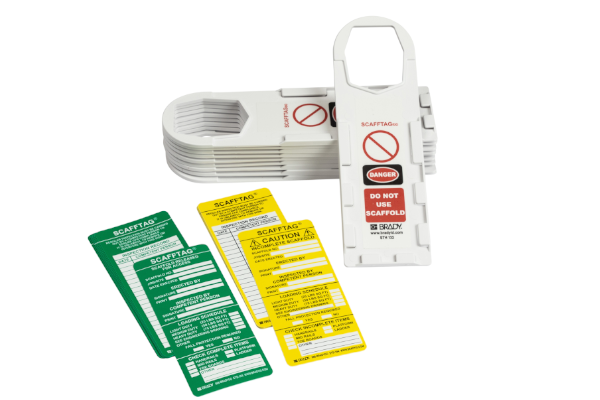
Scaffolding Inspection Process
The type of scaffolding will impact the safety procedures and inspection points. For example, in the case of suspended scaffolding, you should always inspect suspension ropes and platforms.
For system scaffolding, you’ll need to check that all of the modular components are connected correctly and locked. You also need to ensure that the scaffolding is stable, especially if the scaffolding is set on uneven or bare ground.
As with ladders, consider implementing a stoplight system with a “do not use” placard as the default. Create a process for shift changes that requires an outgoing competent person to remove the green tag and an incoming competent person to inspect and add a green tag before any work begins.
Read more about specific scaffolding requirements and best practices in Brady’s Guide to Scaffolding Safety.
Fall arrest systems and harnesses
Faulty fall arrest systems can have devastating consequences. Like scaffolding, harnesses and fall arrest systems have a two-tiered inspection cycle. There is a daily pre-use check by the primary user as well as a formal inspection by a competent person every six months to a year. These inspections should be recorded on a separate log card to show regulators.
If there is any damage to the fall arrest system, or if the safety information printed on the equipment isn’t clearly legible, destroy it immediately. Cut the straps or damage it beyond repair to prevent the gear from being pulled out of the trash and accidentally used.
What to Look for in an Unsafe Harness
Indication of Impact
- Are there broken stitches or evidence of wear and tear? If so, cut the harness straps and throw it away.
Faded Webbing
- UV light can damage the harness’ fabric. If you see any fading on the webbing, do not take the chance. Destroy it.
Direct Writing on the Harness
- Washable and permanent markers can degrade the fibers of the harness. Any writing should be done on a separate tag and permanently attached to the harness. If there is writing directly on the harness, destroy it and dispose of it.
Other major inspection targets
Here are a few other key areas to watch out for:
- Rigging slings. In addition to inspecting harnesses, be sure to pay special attention to rigging slings. These also need to be inspected daily, and any wear and tear or worn tags warrant immediate disposal.
- Eyewash stations. Eyewash stations require weekly visual inspections. Additionally, if the station is plumbed, it needs to be activated weekly to flush the lines. Stagnant water hosts bacteria and microorganisms that can lead to infection.
- Extension cords. Extension cords should be visually inspected before each use. Federal standards generally do not mandate written documentation or formal logs of these inspections, but if there is any damage to the cords they need to be removed from service.
Build a workplace that speaks for itself
You don’t need an OSHA inspection to tell you where your program stands. Take control of visual workplace safety with Brady Safety Services. Our experts help you eliminate safety hazards before they disrupt your operations with hands-on evaluations, recommendations, training and more. Contact a Safety ExpertEquipment Inspection FAQs
What is a "competent person" for equipment inspections?
How does a stoplight tagging system work for equipment safety?
What should be checked during a ladder inspection?
How often does scaffolding need to be inspected?
What are the signs of an unsafe fall harness?
Some of the most common indicators that a fall arrest harness is unsafe and should be destroyed are:
- there are indications of impact, such as broken stitches
- faded webbing from UV damage
- direct writing on the harness which can lead to the degradation of fibers